
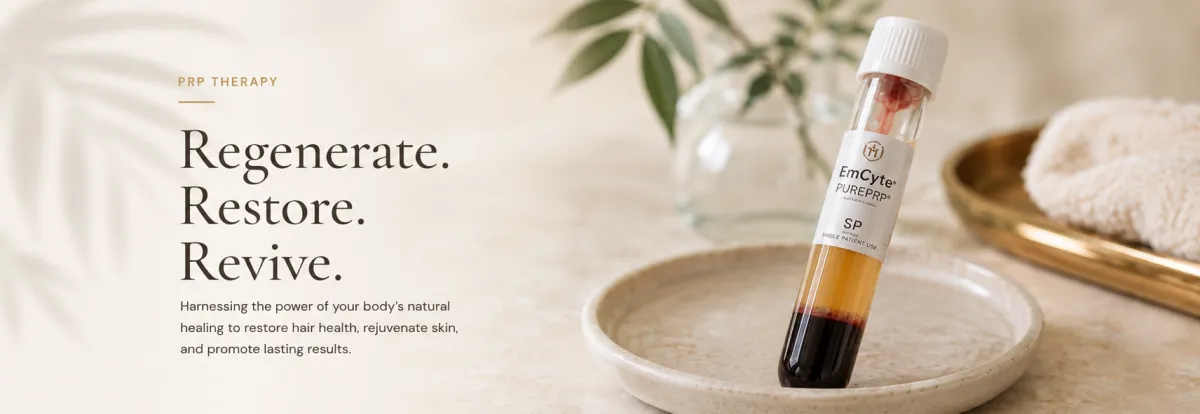
Platelet-Rich Plasma (PRP)
Real results for the right candidates
Whether you're concerned about thinning hair or want to improve skin quality naturally, Platelet-Rich Plasma (PRP) harnesses your own healing potential to stimulate repair and regeneration.
At Riviera Aesthetic, we specialize in high-quality PRP preparation, evidence-based treatment protocols, and honest recommendations.
If PRP is the right treatment for you, we'll tell you. If it isn't, we'll tell you that too.
What is PRP?
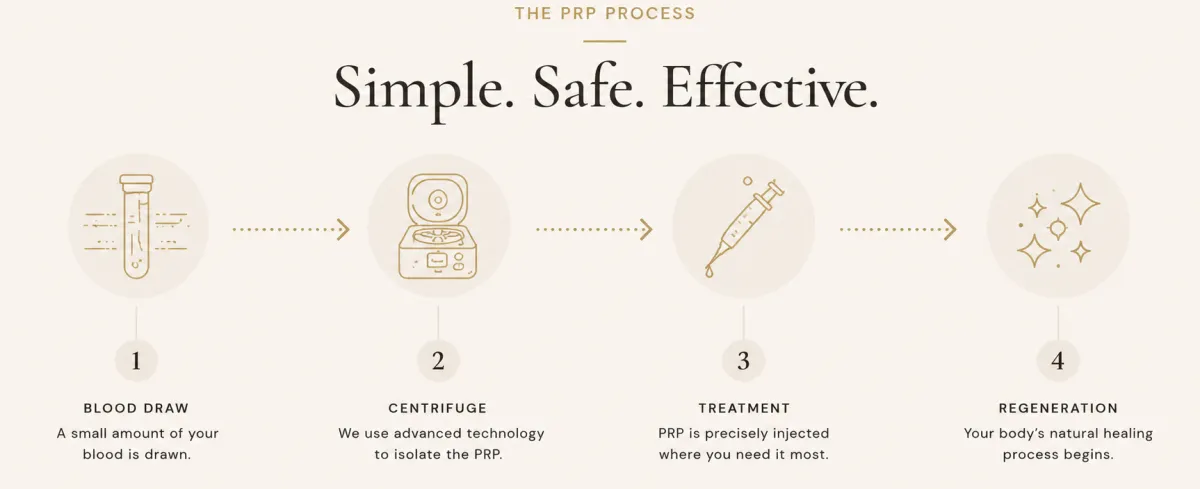
Platelet-Rich Plasma (PRP) is created from a small sample of your own blood.
After your blood is drawn, it is processed in a medical centrifuge that separates and concentrates platelets—cells that naturally contain hundreds of proteins and signaling molecules involved in tissue repair and healing.
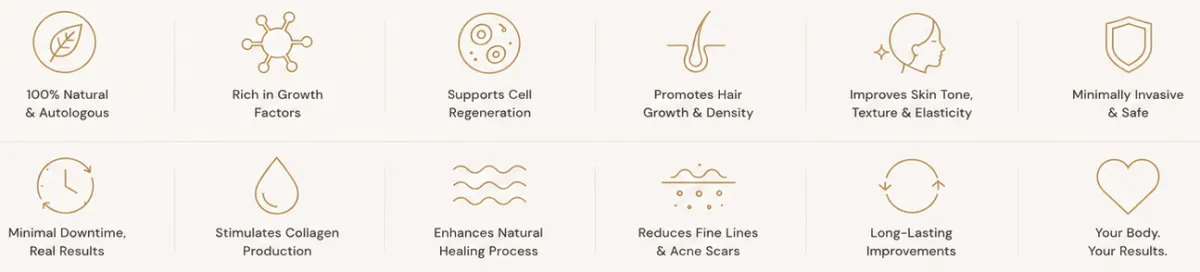
These include growth factors that help stimulate:
Cell communication
Blood vessel formation
Collagen production
Tissue remodeling
Hair follicle activity
Wound healing
Why We Focus on Quality PRP
One of the biggest misconceptions about PRP is that all treatments are the same.
They're not. The quality of the final PRP depends almost entirely on how it is prepared. Different centrifuge systems produce dramatically different concentrations of platelets and growth factors.
At Riviera Aesthetic we use the EmCyte PurePRP® dual-spin system, one of the industry's most respected platforms for preparing highly concentrated platelet-rich plasma.
Our goal is simple:
Deliver the highest quality PRP possible—because concentration matters.
Combination Therapy
Some of the best outcomes come from combining PRP with other proven therapies such as:
Topical DHT blockers (in shampoos or scalp serums)
Oral medications when appropriate (can be finasteride, dutasteride, minoxidil, spironolactone, etc.)
Low-level Laser Therapy (LLLT)
Nutritional optimization
Scalp health treatments.
PRP is rarely the entire solution - but it can be an important part of an effective one.
Because PRP comes entirely from your own blood, it is considered an autologous treatment, meaning there is virtually no risk of allergic reactions or rejection.
PRP for Hair Loss
When hair follicles begin to weaken, they often don't disappear overnight. They become progressively smaller, producing thinner, shorter and weaker hairs.
PRP works by delivering concentrated growth factors directly around these follicles.
The goal is to support follicles that are still alive but beginning to struggle.
For many, this can lead to:
Reduced shedding
Increased hair density
Improved hair thickness
Better hair quality
Healthier scalp environment with lower inflammation.
Results develop gradually over several months as follicles move through their normal growth cycle.
Who Is a Good Candidate?
Results from PRP will depend on the quality of the PRP concentrate, and will always vary from one individual to the next. It is important to identify, who is and who isn't a good candidate to set realistic expectations.
PRP can be a good option for:
Early androgenetic alopecia (AGA)
Diffuse thinning
Women with pattern hair loss
Men with early pattern hair loss
Telogen Effluvium (diffuse shedding)
Hair transplant support
Patients looking to maintain existing hair
Results develop gradually over several months as follicles move through their normal growth cycle.
Who May Not Be?
PRP is not a miracle treatment.
Unfortunately, no treatment can revive follicles that no longer exist.
PRP many not be the best option if:
The scalp has extensive shiny bald areas with no remaining hair follicles
Diffuse thinning
Hair loss is caused by untreated medical conditions
Active inflammatory scalp disease is present
Certain blood disorders are present
Platelet function is impaired.
If we don't believe PRP is likely to help you, we will tell you before treatment begins. Sometimes there are better alternatives.
Is it painful?
Most clients are pleasantly surprised by how well they tolerate PRP. Because the treatment uses very fine needles, most people describe it as mild discomfort rather than significant pain. The injections are very quick - this part typically takes only a few minutes.
The scalp is naturally sensitive, so you may feel brief pinching or pressure during the injections, but the treatment is quick, and most clients return to their normal activities immediately afterward. You may experience mild tenderness or soreness for a day or two, similar to how your scalp feels after a minor bump or a vigorous workout.
If you're nervous about discomfort or have had unpleasant experiences with PRP injections in the past, let us know—we'll take the time to ensure you're as comfortable as possible throughout your treatment, and if required we are happy to discuss various pain management options.
The science on PRP
One of the most common questions we get is: "Does it work". Some clients have tried PRP in the past with moderate success, and results don't happen over night, so it is an important question.
The short answer is: Yes.
If you are the right candidate, procedure has the right quality and you adhere to a proper treatment protocol of at least 4-6 months.
You can read more about the science here.
"A split scalp prospective comparative clinical study included 15 females with AGA [androgenetic alopecia] was performed by intradermal injection of double-spin prepared PRP into the right half of the scalp and single-spin prepared PRP into the left half of the scalp of each patient for three treatment sessions, 3 weeks apart. Results showed clinical improvement in both sides of scalp while hair density measured by trichoscan revealed that the right half of the scalp was significantly higher in median terminal hair density than the left half (P = 0.031), which illustrated that double-spin method could yield better results than single-spin method”.
Source: A. Paichitrojjana (2022): Platelet Rich Plasma and Its Use in Hair Regrowth: A Review.
"Results: A total of 21 studies comprising 628 participants were included in the analysis. PRP treatment was found to significantly enhance hair density and thickness. Additionally, there was a significant reduction in the number of hairs pulled in the PRP group. Adverse effects were generally mild and transient, with no notable difference in pain or discomfort between the PRP and control groups (risk ratio: 1.01; 95% CI: 0.87-1.18).
Conclusion: PRP therapy effectively enhances hair density and thickness in women with hair loss, with a favorable safety profile. However, the effects of PRP on hair density and thickness vary with dosage, injection duration, and ethnicity, indicating the need for tailored treatment protocols."
“The majority of studies demonstrated that PRP is effective in increasing hair density and thickness in patients with AGA. There was a general consensus on the positive effects of PRP, although results varied due to differences in preparation protocols, platelet concentration, and delivery methods.
Additionally, combining PRP with other treatments, such as microneedling or topical medications like minoxidil, showed enhanced efficacy in several studies. While some studies reported conflicting outcomes, the overall evidence supports PRP as a promising treatment for AGA. In conclusion, PRP is a viable therapeutic option for AGA, particularly for increasing hair density and thickness. However, the variability in treatment protocols highlights the need for standardized PRP preparation and application methods.”
Case Study: Hair Loss After Weight Loss
GLP-1 medications have helped countless people achieve remarkable weight loss—but for some, the journey also includes unexpected hair shedding.
In this short video, we explain why it happens, when it is usually temporary, and how treatments such as PRP may help support healthier hair regrowth as part of a personalized treatment plan.

FAQ - PRP for Hair Loss
Science & Safety
FAQ - PRP for Hair Loss
Quality & Our Approach
FAQ - PRP for Hair Loss
Results & What to Expect
What is PRP?
Platelet-Rich Plasma (PRP) is a regenerative treatment created from your own blood. After a small blood sample is drawn, it is processed in a specialized centrifuge to concentrate platelets rich in growth factors.
These growth factors help support tissue repair, improve blood supply, and stimulate natural healing processes.
For hair restoration, PRP is injected into the scalp to support weakened hair follicles and encourage healthier hair growth.
How does PRP work for hair loss?
Hair follicles are living structures that require a healthy blood supply and complex biological signaling to produce thick, healthy hair.
PRP delivers a concentrated dose of your body's own growth factors around these follicles. Rather than creating new hair follicles, PRP aims to improve the function of follicles that are still alive but becoming weaker.
The goal is to reduce shedding, improve hair thickness, increase density, and help preserve existing hair.
Is PRP scientifically proven?
PRP is among the most researched regenerative treatments available today.
Numerous clinical studies have shown positive results for appropriately selected patients with androgenetic alopecia and certain other types of hair loss.
Like many medical treatments, results vary between individuals. Success depends on choosing the right patients, using high-quality PRP preparation, and following an appropriate treatment protocol.
We believe in presenting realistic expectations—not miracle claims.
Is PRP safe?
PRP is considered very safe because it uses your own blood.
Since the treatment is entirely autologous, there is essentially no risk of allergic reactions or immune rejection.
As with any injection procedure, temporary tenderness, swelling, or bruising can occur.
Can I have PRP if I am undergoing chemotherapy?
In general, we do not recommend PRP while you are actively receiving chemotherapy. Chemotherapy works by targeting rapidly dividing cells—including hair follicle cells—and during active treatment the follicles are often unable to respond effectively to regenerative therapies such as PRP. In addition, your oncology team may advise against elective procedures depending on your blood counts and overall health.
However, PRP may be a valuable option after chemotherapy has been completed, particularly if your hair is slow to recover or if chemotherapy has unmasked an underlying tendency toward androgenetic (pattern) hair loss. Once your oncologist has confirmed that it is safe to proceed, PRP can sometimes help support healthier hair regrowth by stimulating follicles that remain viable.
At Riviera Aesthetic, we work with many individuals experiencing medical hair loss, and we have many natural-looking options to conceal your temporary hair loss from chemotherapy.
Is all PRP the same?
No!
One of the biggest misconceptions is that every clinic provides the same PRP treatment.
The quality of PRP depends heavily on the equipment used, how the blood is processed, and the concentration of viable platelets and growth factors that are ultimately delivered.
At Riviera Aesthetic we use the EmCyte PurePRP® system because it is specifically designed to maximize platelet recovery while minimizing unwanted red blood cells.
Higher-quality preparation helps us deliver more consistent treatments.
Why don't you offer cheaper PRP?
Because quality matters.
Preparing PRP correctly requires specialized equipment, trained providers, and high-quality collection systems.
Our philosophy is simple: if we're going to inject your own biology back into your scalp, we want to make sure we're delivering the highest quality PRP possible.
Who is a good candidate?
Ok, so the quality is good but am I a good candidate?
PRP only works for patients who still have active hair follicles.
Examples include:
- Early male pattern hair loss
- Female pattern hair loss
- Diffuse thinning
- Telogen effluvium after the acute shedding phase
- Hair transplant support
- Long-term maintenance of existing hair.
The earlier treatment begins, the better the opportunity to preserve healthy follicles.
Who may not benefit from PRP?
PRP is unlikely to restore hair where follicles are no longer present.
Patients with extensive shiny bald areas, untreated medical conditions affecting hair growth, certain blood disorders, or active scalp inflammation may not be ideal candidates.
If we don't believe PRP is likely to help you, we'll explain why and discuss alternative options.
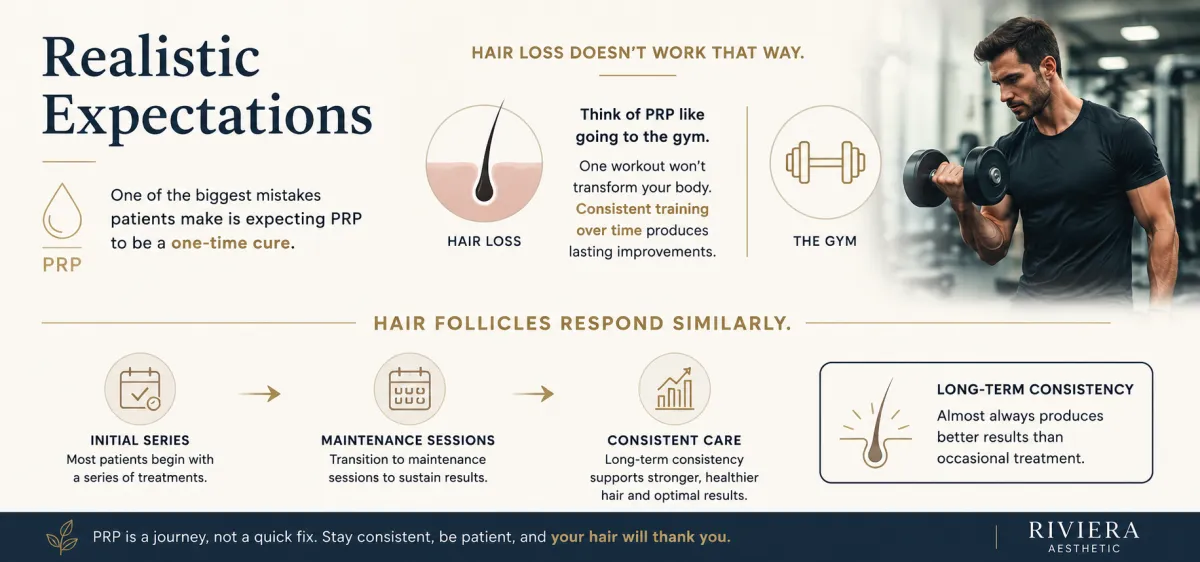
Is it a permanent solution?
No.
Hair loss is usually an ongoing biological process.
PRP helps support healthier follicles, but maintenance treatments are necessary to preserve results.
We often compare PRP to going to the gym: consistency produces better long-term outcomes than occasional treatment.
What happens during a PRP appointment?
Your appointment typically includes:
- Consultation and scalp assessment
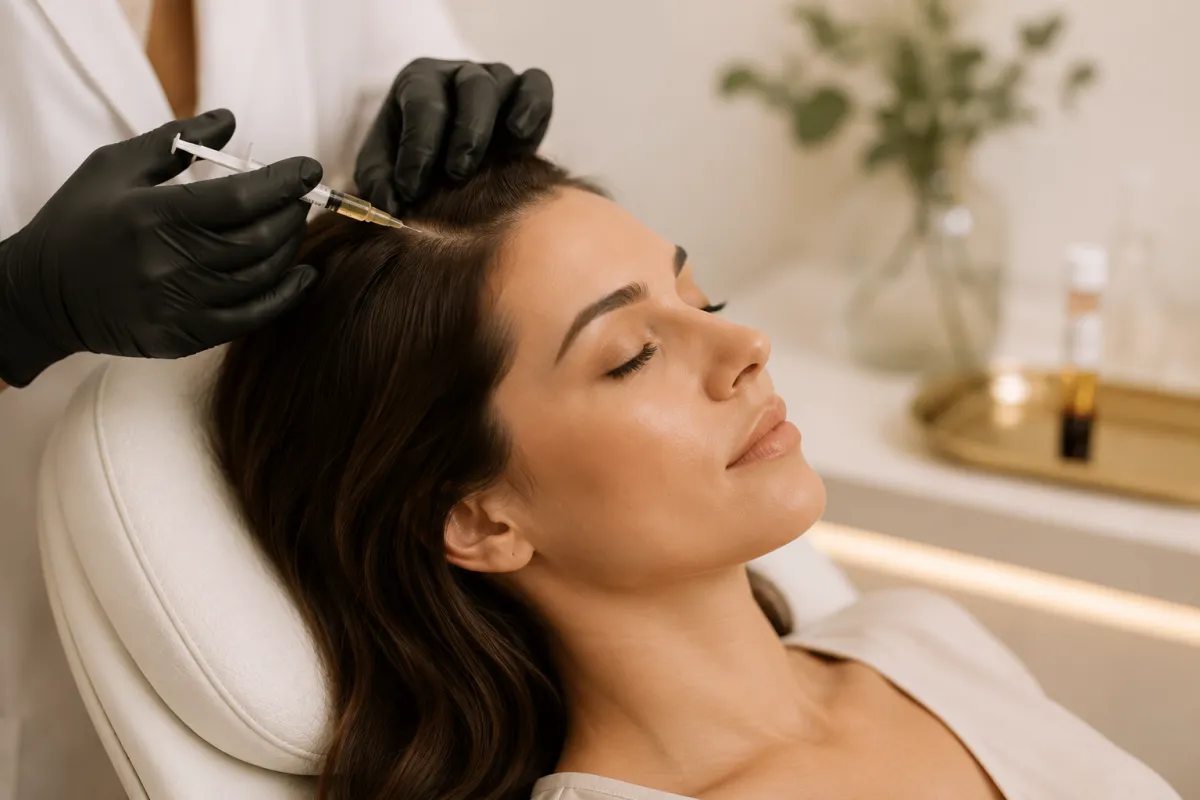
- Blood draw (approximately 60 mL)
- Processing your blood in our EmCyte centrifuge
- Preparation of concentrated PRP
- Precise injections into targeted areas of the scalp.
The visit generally takes about one hour.
Is PRP painful?
Most patients tolerate PRP well.
You may experience a series of quick injections and mild tenderness afterward.
Numbing options can be discussed during your consultation if needed.
Is there any downtime?
Downtime is minimal.
Most patients return to normal daily activities immediately after treatment. Mild soreness or scalp sensitivity usually resolves within a day or two.
How many treatments will I need?
Most patients begin with an initial series of three treatments spaced approximately four to six weeks apart.
Maintenance treatments are then recommended every three to six months depending on your hair loss pattern and treatment goals.
Hair grows slowly. Most patients begin noticing reduced shedding within several weeks, while visible improvements in density and thickness often develop over three to six months.
Maximum improvement usually requires multiple treatments.
Can PRP be combined with other treatments?
Absolutely—and in many cases, it should be.
PRP often works best as part of a comprehensive hair restoration plan.
Depending on your diagnosis, this may include:
- Topical DHT inhibitors
- Minoxidil
- Oral medications when appropriate
- Low-Level Laser Therapy (LLLT)
- Nutritional optimization
- Medical scalp care.
We are owned by a certified trichologist and have a decades long legacy in hair replacement, so our focus is always on what helps the individual client the most, not on any one single therapy or treatment modality.
Why don't you promise dramatic hair growth like I see elsewhere?
Because medicine should be honest. There is far too much misinformation in the hair restoration industry. Some clinics promise unrealistic transformations regardless of diagnosis.
Our philosophy is different.
We evaluate every patient individually, recommend treatments supported by scientific evidence, and only suggest PRP when we believe there is a reasonable likelihood of benefit.
Our goal is not simply to sell treatments—it is to help you make informed decisions about your hair health.
RIVIERA AESTHETIC
By emailing or texting Riviera Aesthetic, you consent to being contacted by phone, email and/or SMS. If you no longer wish to receive any messages, let us know by replying STOP or UNSUBSCRIBE, or by calling us on +1-516-266-2996. Read our Privacy Policy here. You can read our Payment & Refund Policy here.
© Riviera Aesthetic 2026 All Rights Reserved.